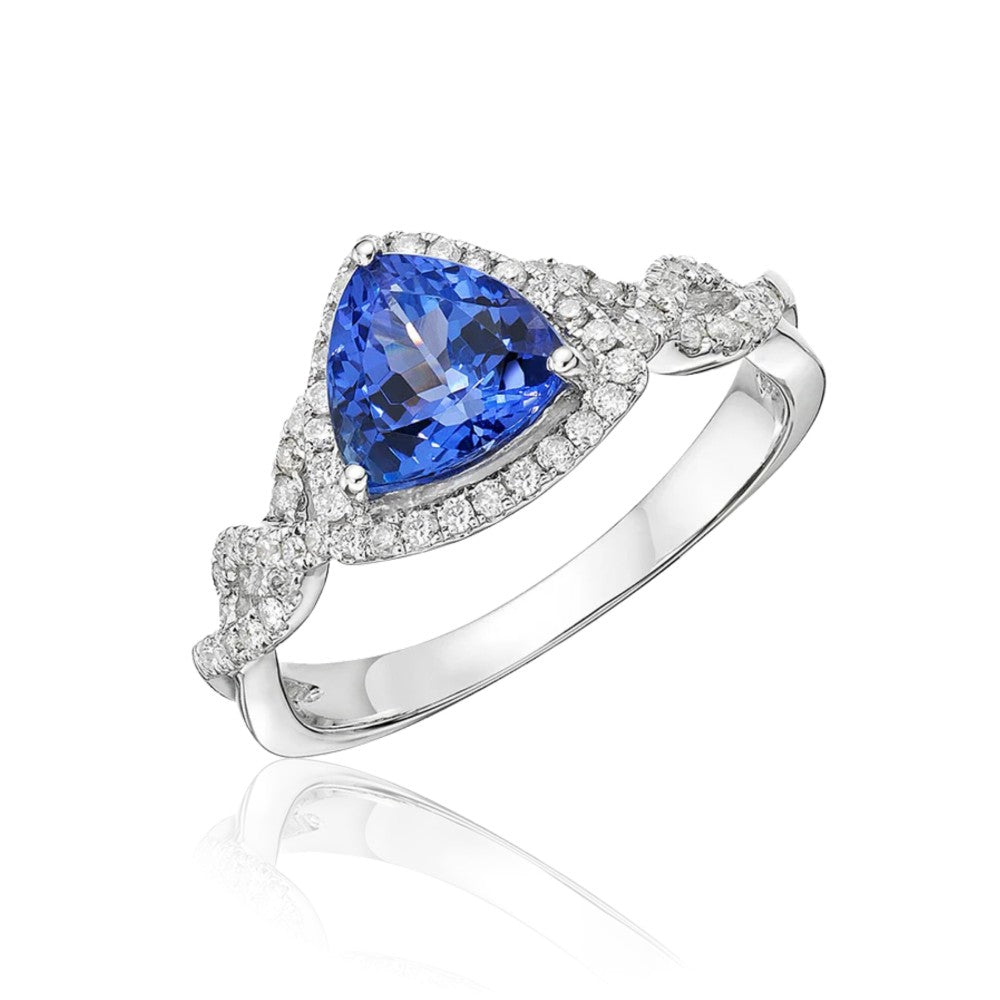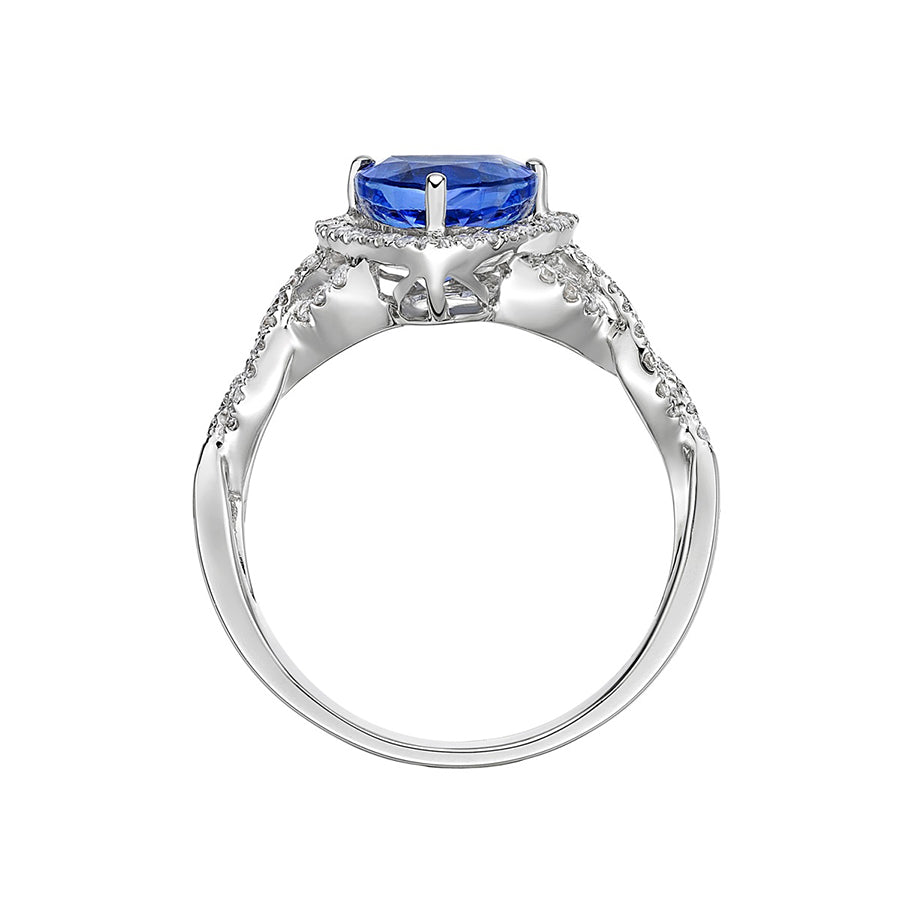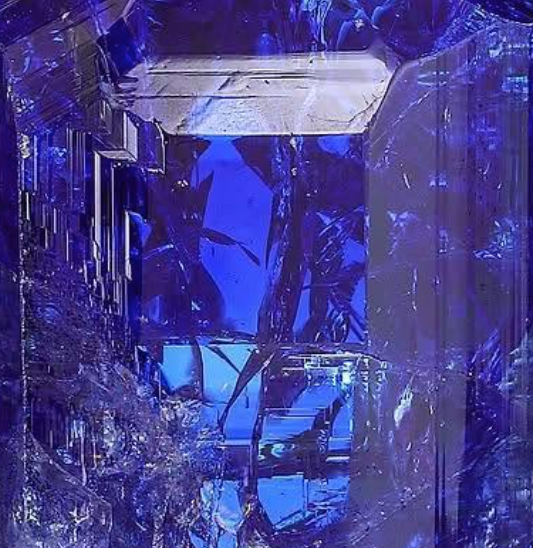
Lab-Grown Tanzanite: Does Good Fake Tanzanite Exist?
After working with tanzanite for far too long, I thought I had probably been asked every tanzanite question imaginable.
Then a customer from Switzerland asked me one I had never been asked before.
Ever.

Why has nobody commercially synthesised tanzanite? ( ie : why is there no good fake tanzanite ?)
It is an excellent question.
We live, after all, in the age of the laboratory-grown gemstone. We can grow diamonds in machines. Synthetic rubies and sapphires have existed for more than a century. Emeralds, alexandrites and other gemstones can also be produced in laboratories.
So where, exactly, is the lab-grown tanzanite?
The short answer is: There isn't any.
The longer answer is considerably more interesting.

First, what would “lab-grown tanzanite” actually mean?
This is where gemstone terminology matters.
We are not talking about blue glass, plastic, coloured cubic zirconia or another material manufactured to look like tanzanite.
Those are imitations, or simulants.
A true synthetic — or laboratory-grown — gemstone has essentially the same chemical composition, crystal structure and physical and optical properties as its natural counterpart.
A laboratory-grown ruby really is corundum.
A laboratory-grown diamond really is crystallised carbon.
The main difference is simply where the crystal grew: one in nature, the other under controlled laboratory conditions.

Have you ever seen a lab-grown diamond? Probably.
In fact, you have probably seen dozens without knowing it.
That is because modern laboratory-grown diamonds are extraordinarily convincing. They are not fake diamonds in the traditional sense; they are diamonds, and distinguishing them from natural stones can require specialist testing equipment.
And don't think that everyone wants the 'real thing'. Laboratory-grown diamonds made up 60% of all engagement-ring centre stones sold in the United States in 2025.
So the obvious question becomes:
If we can grow diamonds this convincingly, why can't we grow tanzanite?
The question actually began with gem certificates
My customer and I had been discussing whether it was worthwhile obtaining a GIA report for his tanzanite.
That led us into a conversation about why reports from respected independent laboratories, such as GIA, IGI or Gübelin is particularly important for gemstones such as ruby and sapphire—but are less critical for tanzanite in one particular respect.
Very convincing synthetic rubies and sapphires have existed for well over a century. Synthetic ruby became the first commercially successful laboratory-grown gemstone at the beginning of the twentieth century. Since then, remarkably convincing synthetic sapphires, rubies and emeralds—and even less expected gems such as alexandrite—have quietly stolen the spotlight, without making quite the same assault on your bank balance

Today, some laboratory-grown rubies and sapphires are so convincing that even a trained gemmologist may need careful microscopic examination—and sometimes advanced laboratory equipment—to determine whether a stone is natural or synthetic.
Tanzanite presents a rather different risk.
An independent laboratory report can still be extremely valuable, particularly for an important stone. It confirms that the gemstone really is natural tanzanite and records useful gemmological information, including its weight, measurements, shape, cutting style, colour and any detectable treatments.
However, the risk of encountering an exceptionally convincing true synthetic tanzanite simply does not currently exist in the same way that it does with ruby, sapphire, emerald or diamond.
But we do not currently have a jewellery market awash with exceptionally convincing, commercially produced true synthetic tanzanite.
And that was when my customer asked:
Why not?
I had never really thought about it before.
But I suspect the answer is a combination of three things.
1. There probably isn't enough money in it
Developing a reliable method of growing gem-quality crystals is not simply a matter of mixing the right ingredients together and waiting.
It can require years of research, expensive equipment, highly controlled conditions and an enormous amount of experimentation.
And even if you manage to grow the mineral, that is only the beginning.
To create a commercially successful lab-grown tanzanite, somebody would need to produce crystals that were large, transparent, clean, beautifully coloured and suitable for faceting.
Then they would need to reproduce those results consistently enough — and cheaply enough — for the whole exercise to make commercial sense.
That last part is where things become awkward.
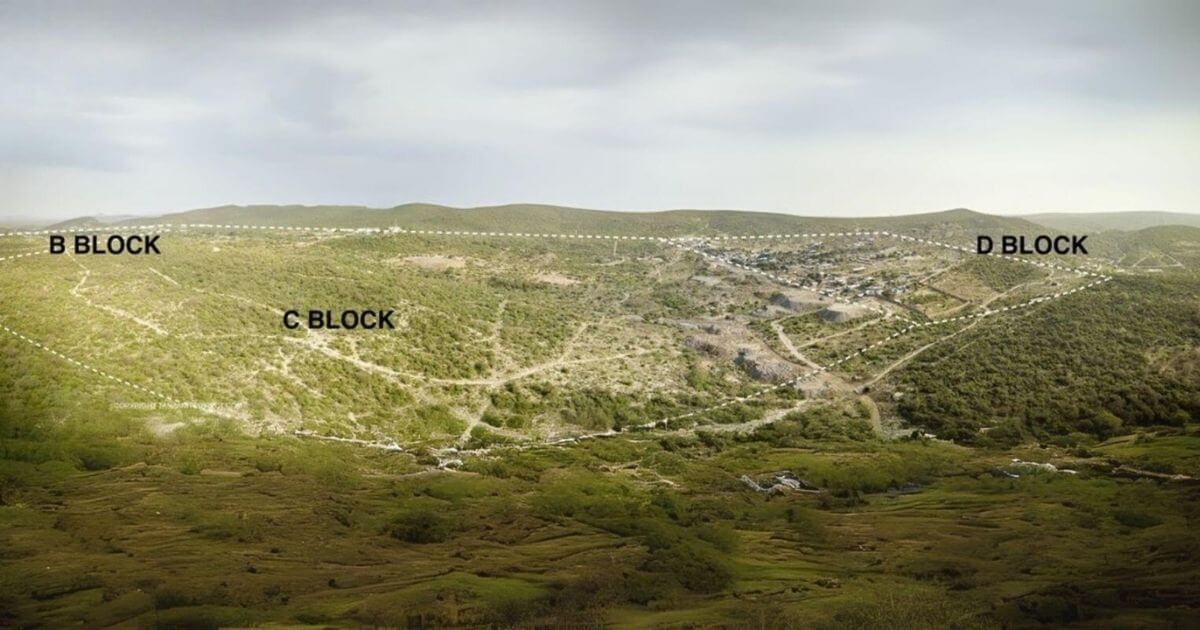
Tanzanite is geologically extraordinarily rare. It comes from one tiny area of northern Tanzania.
But in commercial terms it is still not remotely as expensive as the finest rubies, emeralds, Paraíba tourmalines or some exceptional coloured diamonds.
So if you were a very clever laboratory chemist deciding which gem-growing problem to spend millions of dollars solving, would tanzanite be your first choice?
I love tanzanite, obviously.
But probably not.
If I were the chemist, I might be rather more tempted by Paraíba tourmaline.
Fine Paraíba can sell for extraordinary sums per carat, and at the last trade show in Hong Kong I saw some small but stunning neon blue babies for 25,000 USD per carat.. Crack that problem successfully and suddenly your laboratory experiment looks rather more like a business model.
With tanzanite, the economic calculation may simply be:
Yes, perhaps we could work out how to make it. But why would we?
2. Ruby and sapphire had something tanzanite does not: enormous industrial demand
Ruby and sapphire are both varieties of the mineral corundum.
And the incentive to synthesise corundum was never limited to making jewellery.
Corundum is extremely hard and enormously useful.
Synthetic versions have been used for abrasives, grinding materials, precision components, watch jewels, optics, electronics, laser technology and highly scratch-resistant surfaces.
Think watch components, camera covers, specialist windows and industrial equipment.
Suddenly there were many reasons to learn how to grow corundum reliably and in quantity.
Jewellery was only one part of the opportunity.
Tanzanite has no equivalent industrial empire lurking behind it.
Zoisite — the mineral of which tanzanite is the blue-violet variety — simply does not have a giant technological market waiting for tonnes of synthetic material.
There are no armies of engineers saying:
"If only someone would manufacture several hundred kilos of flawless synthetic zoisite."
Which rather removes the incentive.

3. Zoisite is also a more complicated crystal
Tanzanite is the blue-to-violet gem variety of zoisite.
Chemically, zoisite is a calcium aluminium silicate hydroxide.
Corundum, by comparison, is aluminium oxide.
A considerably simpler proposition.
That does not mean zoisite cannot be produced experimentally.
It can.
Scientists have produced synthetic zoisite in research settings.
But this is where an important distinction appears.
Growing some zoisite in a laboratory is one thing.
Growing a large, transparent, richly coloured, beautifully clean crystal capable of being cut into a flawless ten-carat gemstone is something else entirely.
And doing it once is still not enough.
You have to do it again.
And again.
And again.
Reliably.
At commercial scale.
For less money than it costs to obtain the natural material.
That is the point at which an interesting mineralogical experiment becomes an extremely expensive manufacturing problem.
So what is the “synthetic tanzanite” you sometimes see advertised?
Usually, something else.
There are materials that can imitate tanzanite's famous blue-violet appearance surprisingly well.
One particularly interesting example is synthetic forsterite, which has been used specifically as a tanzanite imitation and can show strong pleochroism.
Glass, cubic zirconia, synthetic sapphire and other manufactured materials may also be sold as tanzanite substitutes.
But none of these is actually tanzanite.
They do not have the same chemical composition or crystal structure as zoisite.
Calling one of them “synthetic tanzanite” is rather like producing an extremely convincing turkey substitute and advertising it as laboratory-grown chicken.
The problem isn't whether it looks convincing.
It is simply not the same thing.

And tanzanite has one particularly good party trick
One of the things that makes fine tanzanite so captivating is its pleochroism.
Rotate a good stone and the colour can shift dramatically.
Rich blue in one direction.
Violet appearing from another.
Sometimes flashes of both as the stone moves.
It gives tanzanite a life and personality that is surprisingly difficult to convey in photographs.
Some simulants can mimic parts of this effect rather well — synthetic forsterite in particular — but a competent gemmologist can still easily separate them from natural tanzanite by examining their optical and physical properties, often just by eye alone.
And, crucially, they remain simulants.
They are not laboratory-grown blue zoisite.

Could somebody eventually make true lab-grown tanzanite?
Absolutely.
I would never say never in gemstone synthesis.
The history of synthetic gems is essentially a history of things that were once impossible becoming extremely difficult, then merely expensive, and eventually routine.
And zoisite itself has already been synthesised experimentally.
So the scientific door is certainly not closed.
What we do not currently have is the tanzanite equivalent of lab-grown diamond or synthetic sapphire: large, transparent, facetable blue-violet zoisite being manufactured commercially and sold routinely into the jewellery market.
Could somebody eventually solve that problem?
Almost certainly.
Whether anybody can solve it beautifully enough, consistently enough and cheaply enough to make money from it is a rather different question.
So, what is the answer?
My customer's wonderfully original question probably has a disappointingly unromantic answer.
It is probably not that synthetic tanzanite is scientifically impossible.
It is that nobody has yet found sufficient commercial reward in producing beautiful, transparent, facetable synthetic blue zoisite to make solving the technical problem worthwhile.
Or, to put it much more simply:
Nobody has yet found enough money in lab-grown tanzanite to make creating it worthwhile.
Good.
I rather like it that way.

And this leads to one final, slightly philosophical point
There is a tendency to talk about natural gemstones as though rarity alone explains their fascination.
It doesn't.
A fine tanzanite is the outcome of an astonishingly specific chain of geological circumstances: chemistry, pressure, temperature, trace elements, tectonic activity and geological time — all converging in one tiny part of Tanzania.
We know the mineral.
We know its chemistry.
We understand a great deal about how crystals grow.
And yet we still don't have factories quietly churning out forty-carat flawless synthetic tanzanites by the thousand.
I rather like that.
For all our technological swagger, there remain a few things at which the Earth is still considerably better than we are.
And, for now at least, tanzanite is one of them.

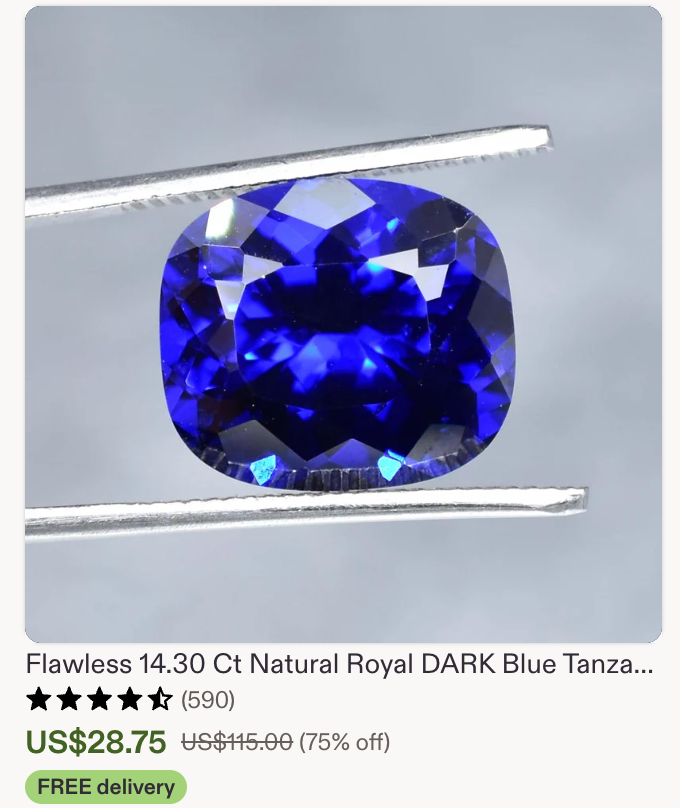
When you see listings for "lab-grown" or "created" tanzanite online, they are usually made of alternative materials meant to imitate the color:
- Tanzanite-blue Cubic Zirconia (CZ): Cubic zirconia infused with color to mimic blue-violet hues.
- Synthetic Forsterite: A lab-produced mineral from the olivine family that displays similar optical properties and pleochroism.
- Synthetic Sapphire or Spinel: Man-made corundum colored to look like tanzanite.
- Colored Glass: Inexpensive glass cut into gemstone shapes

Scritto da Linda Kennedy